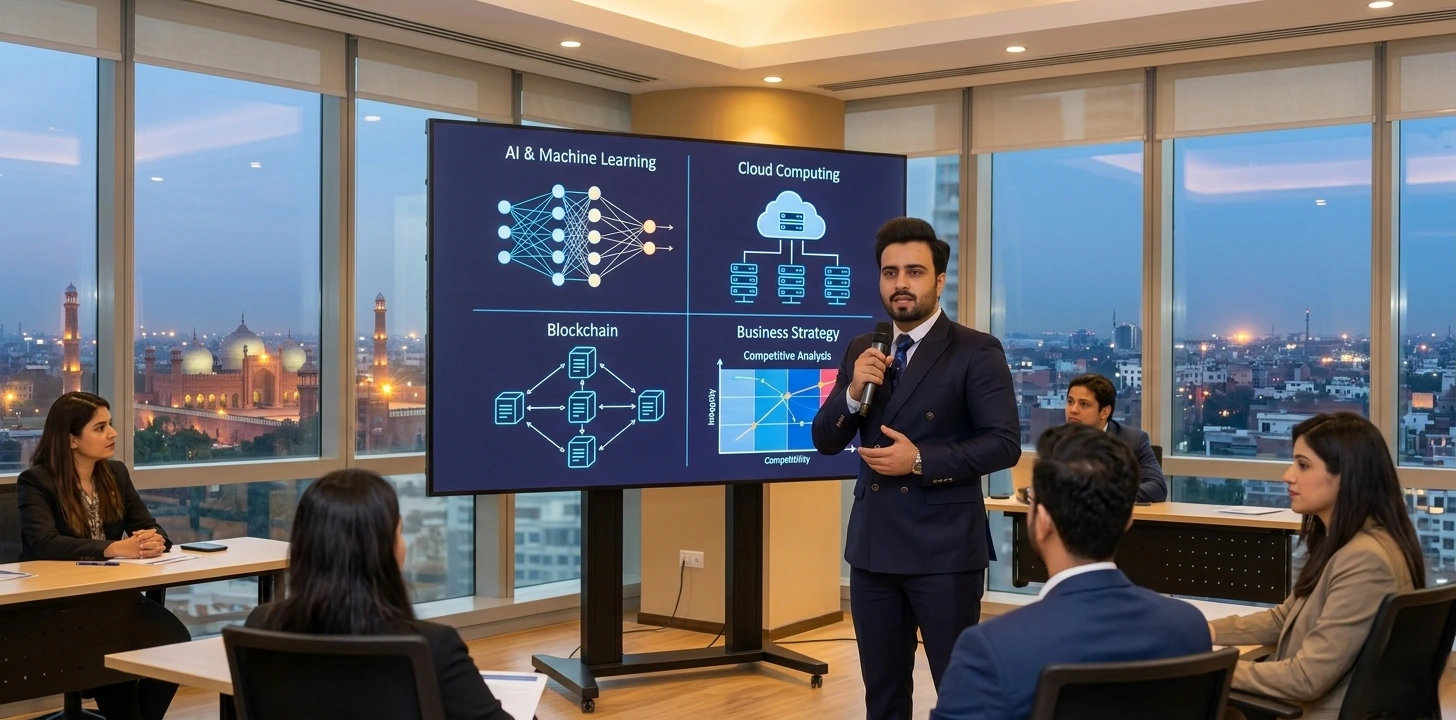
What is Corporate Training?
Corporate training refers to structured learning initiatives aimed at improving employees' knowledge, skills, and competencies. It includes a wide range of activities such as seminars, workshops, online courses, mentoring, and on-the-job training. The primary goal of corporate training is to enhance workforce performance, bridge skill gaps, and prepare employees for current and future business challenges.
Modern corporate training also focuses on upskilling and reskilling, ensuring employees adapt to new technologies, automation, and digital transformation. Organizations use corporate training for onboarding new hires, compliance, professional development, leadership growth, and overall workforce capability enhancement.
Why Corporate Training Matters for Businesses in Lahore
Corporate training is a strategic investment with measurable benefits:
- Improved Employee Performance: Equips employees with skills required to excel in their roles, improving productivity and efficiency.
- Talent Retention: Shows commitment to employee growth, increasing engagement and reducing turnover.
- Leadership Development: Prepares future leaders with critical decision-making, strategic thinking, and team management skills.
- Adaptation to Change: Keeps employees updated with industry trends, technologies, and regulatory standards.
- Enhanced Organizational Culture: Strengthens workplace values and promotes collaboration across teams.
Types of Corporate Training Programs
Skills-Based Training
Focuses on role-specific competencies such as technical skills for IT teams, sales techniques for sales staff, customer service excellence for support teams, and leadership for managers.
Workplace Skills Training
Enhances interpersonal skills including communication, problem-solving, critical thinking, and teamwork. These skills are essential for navigating day-to-day workplace challenges effectively.
Compliance Training
Educates employees on regulatory requirements, company policies, and legal obligations. Topics may include workplace safety, data privacy, anti-harassment, diversity, and code of conduct.
Leadership Development
Develops managerial and executive skills to drive decision-making, strategic initiatives, and team management across the organization.
Onboarding and Orientation
Introduces new employees to company culture, processes, and policies, helping them quickly integrate and become productive members of the team.
Reskilling and Upskilling
Reskilling prepares employees for new roles, while upskilling enhances current capabilities to meet evolving job demands, particularly with emerging technologies.
Who Uses Corporate Training?
Organizations across industries benefit from corporate training, including:
- Information Technology: Upskills employees in emerging technologies, coding, cloud computing, cybersecurity, and project management to stay competitive and innovate faster.
- Healthcare: Trains staff on compliance, patient care protocols, medical technologies, and soft skills to ensure safety, accuracy, and quality service.
- Financial Services: Enhances knowledge of regulations, risk management, financial products, and customer service to maintain compliance and improve client satisfaction.
- Retail: Develops sales, product knowledge, customer engagement, and operational efficiency to drive revenue and enhance the shopping experience.
- Pharmaceuticals: Educates employees on regulatory compliance, research protocols, and product knowledge to ensure safe practices and industry standards.
- Manufacturing: Improves operational efficiency, safety, technical skills, and process optimization to boost productivity and reduce workplace risks.
With the rise of online learning platforms, organizations now combine in-person corporate training with digital learning tools to deliver scalable, flexible, and accessible learning solutions.
P2PClouds – Leading Corporate Training in Lahore
P2PClouds delivers customized corporate training solutions in Lahore designed to meet organizational objectives and employee development goals. Key offerings include:
- Technical Training: Web development, mobile app development, cloud computing, cybersecurity, and data analytics.
- Professional Skills: Leadership, communication, teamwork, project management, and problem-solving.
- Compliance and Policy Training: Legal, safety, and industry-specific regulatory compliance programs.
- Flexible Delivery: On-site workshops, virtual instructor-led sessions, and blended learning options.
- Measurable Impact: Performance tracking, feedback mechanisms, and follow-up coaching to ensure ROI.
By combining expert instructors, practical learning, and flexible delivery, P2PClouds ensures employees gain skills that directly contribute to organizational growth and success.
Top Corporate Training Providers in Lahore
Other notable corporate training providers in Lahore include:
- BURRAQ Consulting – Training & Certification: Specializes in ISO standards, compliance, and occupational safety training.
- Corporate Floor: Offers leadership coaching, soft skills workshops, and professional development seminars.
- ICT Trainings Institute: Focused on IT and software skills for technology-driven organizations.
Global Online Platforms for Corporate Training
For scalable corporate learning, global platforms complement local training:
- Coursera for Business: University-backed courses in business, leadership, and IT.
- LinkedIn Learning: Soft skills and professional development programs.
- Udemy Business: Flexible e-learning covering technical, business, and management skills.
- Skillsoft Percipio: Corporate-focused content for IT, leadership, and compliance.
How to Organize Corporate Training
To implement effective training programs:
- Identify Training Needs: Conduct a skills gap analysis to pinpoint workforce gaps.
- Set Clear Objectives: Align training goals with business strategies and employee development plans.
- Design Training Programs: Develop instructor-led, online, or blended learning solutions tailored to organizational requirements.
- Select Delivery Methods: Choose in-person, virtual, or blended approaches depending on accessibility and scalability.
- Evaluate Training Effectiveness: Measure performance improvements, collect feedback, and assess ROI.
- Stay Updated: Regularly revise training content to reflect industry trends and technological advancements.
Benefits of Corporate Training
Corporate training delivers significant, measurable benefits for both organizations and employees:
- Enhanced Workforce Skills and Productivity: Employees gain the technical, professional, and soft skills needed to perform at their best, driving overall productivity.
- Greater Employee Motivation, Engagement, and Retention: Investing in staff development boosts morale, fosters loyalty, and reduces turnover.
- Improved Adaptability to Evolving Business Needs: Continuous training ensures employees can respond effectively to industry changes, new technologies, and market demands.
- Stronger Leadership Pipelines: Leadership development programs prepare employees for managerial and executive roles, securing future organizational growth.
- Higher Organizational Efficiency and Profitability: Well-trained employees work smarter, optimize processes, and contribute directly to improved operational outcomes and revenue growth.
Corporate Training Trends in 2026
- Microlearning: Short, focused lessons integrated into daily workflows.
- Personalized Learning Paths: Custom content based on employee experience, skill gaps, and career goals.
- Blended Learning Models: Combining online and in-person sessions for flexible delivery.
- AI-Driven Learning: Adaptive content, real-time feedback, and automated skill tracking.
- Focus on Soft Skills: Emotional intelligence, resilience, and problem-solving alongside technical skills.
Conclusion
Corporate training is no longer optional; it is a strategic necessity for organizations in Lahore aiming to stay competitive. P2PClouds offers comprehensive, customized corporate training programs that build technical expertise, leadership capacity, and employee engagement. By investing in workforce development, organizations can improve efficiency, retain talent, and achieve sustainable growth.