Introduction
Education and corporate training in Pakistan are undergoing a structural transformation. Institutions in Lahore and across the country are rapidly shifting toward hybrid and digital learning models. At the center of this transformation is LMS (Learning Management System) software, now enhanced with Artificial Intelligence (AI) capabilities.
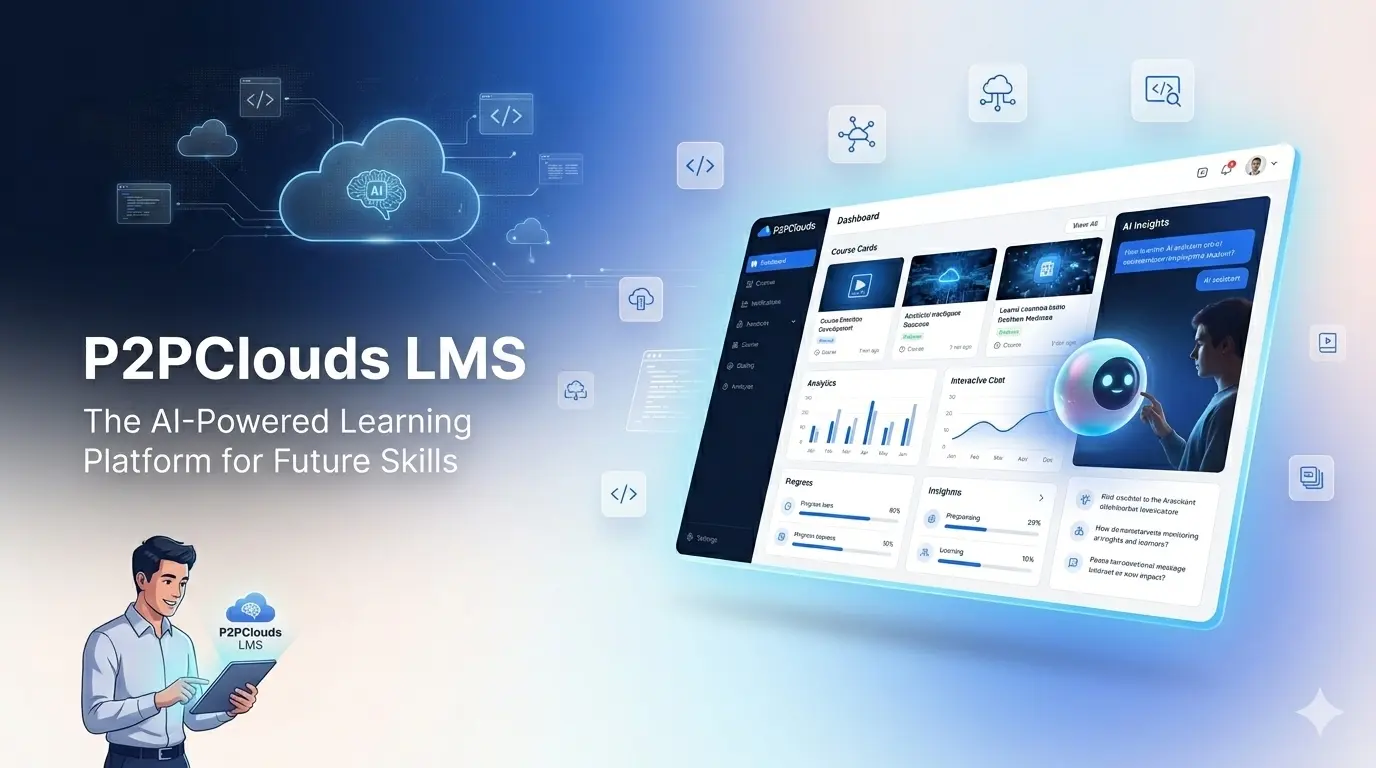
Modern LMS platforms are no longer just content delivery tools. They have evolved into intelligent ecosystems that automate teaching, personalize learning, and provide deep insights into performance. This article explains what LMS software is, how it works, and highlights the best LMS AI software solutions in Lahore and Pakistan, including advanced platforms like P2PClouds LMS.
Understanding LMS Software Meaning
A Learning Management System (LMS) is a digital platform designed to create, manage, deliver, and track educational or training programs. Instead of relying on manual processes, LMS software centralizes everything into one system:
- Course Management: Educators design complete learning paths with videos, quizzes, and assignments in one place.
- Performance Tracking: Automated real-time insights into progress, attendance, and engagement.
- Streamlined Communication: Built-in messaging, notifications, and forums for teachers and students.
How LMS Software Works
- Content Creation: Trainers upload structured materials (Videos, PDFs, Quizzes).
- User Management: Roles like Admin, Teacher, and Student control system access.
- Learning Delivery: Students access content via web or mobile apps.
- Assessment: Automated grading for quizzes and assignments reduces workload.
- Analytics: Detailed reports identify weak areas and improve strategies.
- AI Integration: Systems recommend personalized paths and predict at-risk learners.
Role of AI in Modern LMS Software
Artificial Intelligence is redefining LMS platforms in Pakistan. Key capabilities include:
- Adaptive Learning: Systems adjust content difficulty based on student performance.
- Intelligent Recommendations: Suggesting materials based on user behavior.
- Automated Feedback: Providing instant, consistent grading.
- AI Chatbots: 24/7 support for students and employees.
Best LMS AI Software in Lahore & Pakistan
1. P2PClouds LMS – Advanced AI-Ready Solution
P2PClouds LMS is a comprehensive platform developed in Lahore, designed specifically for local educational institutions, training centers, and enterprises in Pakistan.
Key Strengths:
- Operational Integration: Combines LMS with fee verification, automated attendance, and course management in one centralized system.
- Automated Session Scheduling: Classes can automatically generate secure meeting sessions for live lectures without manual setup by instructors.
- Integrated Virtual Classroom: Built-in live class capability allows teachers and students to join sessions directly from the LMS portal.
- Automatic Recording System: Every live session is automatically recorded without requiring manual configuration by the teacher.
- Quick Recording Availability: Recorded lectures, meeting recordings, and class notes become accessible to both students and teachers within 45 minutes after the class ends, ensuring learners can quickly review missed concepts.
- AI-Assisted Meeting Notes: The system can automatically generate summarized class notes from recorded sessions, helping students quickly revise key points.
- Scalability: Cloud-based architecture designed to support small academies, universities, and large enterprise training environments.
- Local Alignment: Built to handle the administrative workflows and educational needs specific to Pakistani institutions.
2. Google Classroom
A basic alternative widely used for simple course management and Google Workspace integration. However, it lacks many enterprise-level automation features such as automated meeting generation, AI summaries, and integrated analytics available in advanced LMS platforms.
Cloud-Based vs Traditional LMS
In Lahore, Cloud-Based LMS solutions are dominating because they are accessible from anywhere, require no physical server infrastructure, and scale easily as user counts grow. Traditional on-premise systems offer more data control but come with significantly higher upfront IT costs and less flexibility.
Challenges of Implementation
Adoption in Pakistan faces specific hurdles:
- Digital Literacy: Training is required for effective feature utilization.
- Connectivity: Internet issues in certain regions impact accessibility.
- Resistance to Change: Shifting from traditional paper-based systems to digital workflows.
Future Outlook & Conclusion
The future of LMS in Pakistan is linked with Predictive Analytics and AR/VR integration. AI-driven automation will eventually reduce administrative overhead to almost zero, allowing educators to focus entirely on teaching.
LMS software is no longer an option; it is a necessity for delivering consistent, scalable, and data-driven education. Platforms like P2PClouds LMS are leading this charge by providing the intelligent ecosystems required for long-term success in a digital-first world.