

AI is no longer a sci-fi concept; it is the engine expanding human creativity, making production faster, smarter, and accessible to a global range of creators.
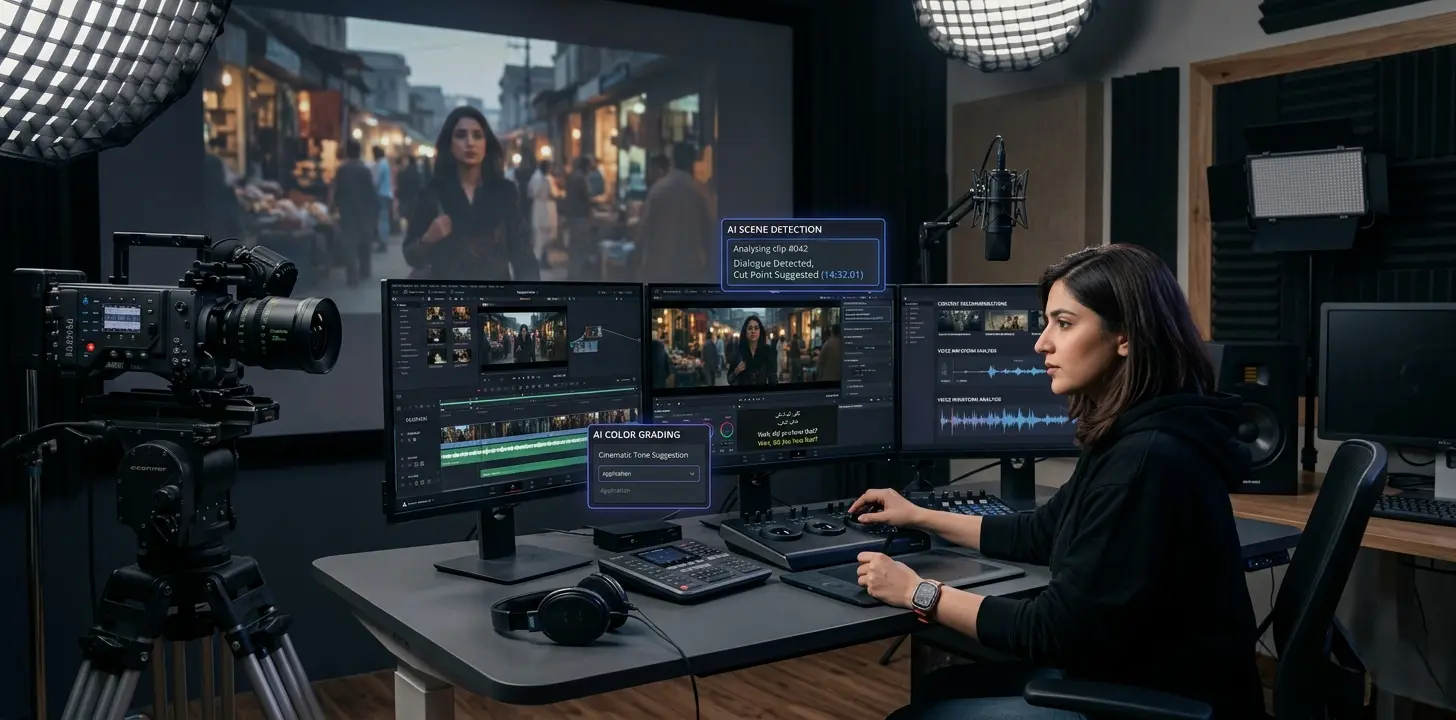
Artificial Intelligence (AI) has moved far beyond experimental labs and sci-fi imagination. It is now deeply embedded in how content is created, distributed, and experienced across the entertainment and media industry. From streaming platforms that understand viewer behavior to music tools that compose original tracks, AI is reshaping how stories are told and consumed.
The industry is no longer driven only by human intuition, as data and machine learning now guide many creative and business decisions. This shift is not replacing creativity but expanding it, making production faster, smarter, and more accessible to a wider range of creators.
Artificial Intelligence influences every stage of the media lifecycle, from idea generation to audience engagement. It helps creators identify trends, predict audience preferences, and optimize content before it even reaches the market.
Media companies are now using AI to reduce uncertainty in decision making, especially when investing in large scale productions. At the same time, AI allows real time adjustments in marketing and distribution strategies, making campaigns more responsive and effective. This widespread integration has turned AI into a foundational layer of the modern media ecosystem.
Music: Redefining Sound and Distribution AI driven tools can now compose original tracks by analyzing patterns in melody and rhythm. Production processes such as mixing and mastering are now automated, allowing artists to produce high quality music without expensive studio setups.
Film and Television: Changing Production Dynamics Studios are using AI to analyze scripts and predict audience reactions. Pre-production tasks like scheduling and budgeting are partially automated, while post-production AI assists with editing and visual effects.
Gaming: Building Intelligent Experiences Modern games use AI to create intelligent non-player characters (NPCs) that respond dynamically to player actions. Procedural generation allows for vast environments, while AI adjusts game difficulty in real time to suit player skill levels.
Advertising: Precision at Scale AI analyzes user behavior to create specific audience segments rather than relying on broad demographics. Creative content like ad copy can be generated dynamically, allowing brands to test variations simultaneously for maximum effectiveness.
Publishing: Smarter Content and Distribution Manuscript screening is faster, with AI identifying promising content based on market trends. Editing tools help writers refine tone and structure, while AI supports book distribution by predicting demand and optimizing supply chains.
AI tools can now generate written content, visuals, and videos, significantly reducing the time required for production. Beyond creation, platforms use AI to moderate content at scale and improve metadata classification. The rise of virtual influencers and AI-generated personalities is further redefining digital consumption.
While the benefits are substantial, the industry faces critical hurdles:
Addressing these requires careful regulation and a commitment to transparency.
AI is not replacing creativity; it is expanding it into new dimensions. The entertainment and media industry is moving toward a collaborative model where human creativity and machine intelligence work together seamlessly.
While AI handles scale, speed, and data analysis, humans continue to drive emotion, storytelling, and originality. Those who successfully balance innovation with ethical responsibility will define the next era of creative expression.