

Manufacturing is no longer about static assembly lines; it is an adaptive, intelligent ecosystem. Discover how AI is shifting the industry from reactive repairs to autonomous optimization.
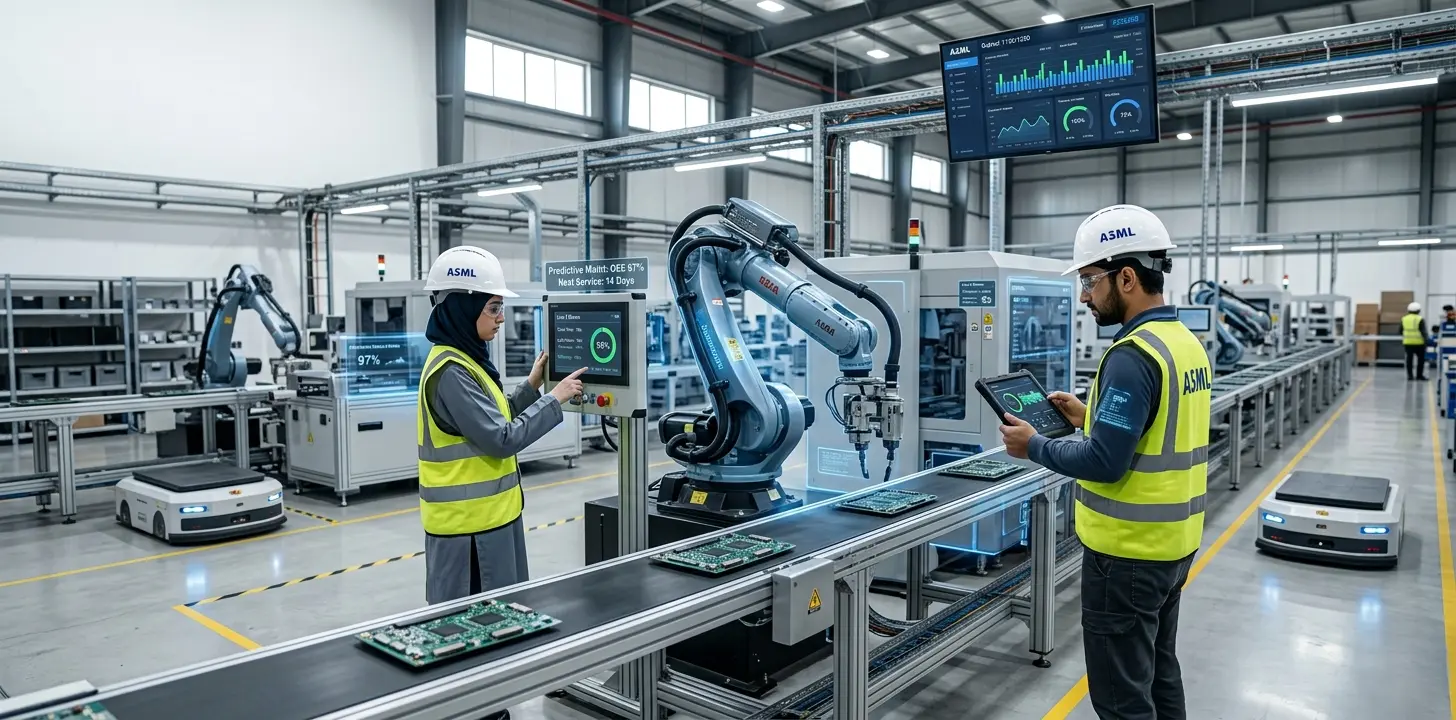
By 2026, manufacturing is no longer defined by static assembly lines and repetitive workflows. It has evolved into an intelligent, adaptive ecosystem powered by Artificial Intelligence. This transformation goes beyond simple automation; it represents a fundamental shift in how factories operate, make decisions, and deliver value across the entire production lifecycle.
AI enables manufacturers to move from reactive operations—waiting for a machine to break—to predictive and autonomous systems. Organizations can now anticipate failures, optimize processes in real-time, and continuously improve performance. This creates a decisive competitive advantage by reducing operational costs while increasing flexibility and innovation capacity.
Industrial Internet of Things (IIoT) Integration The backbone of the 2026 smart factory is the seamless connection between sensors and AI. Connected devices continuously collect real-time data from the shop floor, creating a rich ecosystem that AI analyzes to generate insights. This allows for instant responses to changing conditions, ensuring equipment performance is always at its peak.
Digital Twins and Simulation Digital twins—virtual replicas of physical production lines—allow manufacturers to simulate 'what-if' scenarios without interrupting actual operations. In 2026, AI-enhanced digital twins enable predictive analysis, helping engineers identify bottlenecks and optimize workflows in a virtual environment before a single bolt is turned in the physical world.
One of the most impactful applications of AI is Predictive Maintenance. By analyzing real-time sensor data, AI systems forecast equipment failures before they occur. This proactive approach extends machinery lifespan and transforms maintenance from an emergency expense into a strategic, scheduled function.
Furthermore, AI-Powered Quality Control has replaced manual inspection in high-speed environments. Computer vision systems now perform real-time inspections with sub-millimeter precision. These systems not only detect defects but also identify the root causes in the production line, allowing for immediate corrective adjustments that drastically reduce waste.
Robotics Process Automation (RPA) AI-powered robots in 2026 have moved beyond basic repetitive tasks. They now learn from data, improving their precision and consistency over time. These systems automate complex workflows, from intricate part assembly to intelligent production scheduling, making processes more scalable and reliable.
Edge AI for Real-Time Decisions In high-speed production, latency is the enemy. Edge AI processes data directly on the factory floor rather than relying on distant cloud servers. This enables machines to make split-second decisions—such as stopping a line if a safety hazard is detected or adjusting power consumption during peak loads—without the delay of external data transmission.
Precision Market Intelligence AI models now analyze historical data, seasonal trends, and global economic indicators to predict consumer demand with high precision. This alignment allows manufacturers to reduce overproduction and minimize inventory costs, ensuring the supply chain remains lean and responsive.
The Rise of Mass Customization Consumer demand is shifting toward personalized products. AI enables 'Flexible Manufacturing,' where production lines can quickly adapt to different product specifications. This allows companies to deliver customized goods at the scale and cost-efficiency of mass production, providing a significant edge in modern retail markets.
AI is not replacing the industrial workforce; it is augmenting it. In 2026, AI-driven training systems use Augmented Reality (AR) to provide personalized, hands-on learning for workers, helping them acquire the technical fluency required for smart environments.
Workforce planning tools also analyze productivity patterns to allocate human resources where they are most effective. By handling routine data management and technical monitoring, AI allows human workers to focus on high-value tasks such as complex problem-solving, ethical oversight, and creative design.
As manufacturing becomes more connected, it faces new vulnerabilities. Cybersecurity is now a top-tier priority; AI security systems are deployed to detect unusual network patterns and prevent industrial espionage or production sabotage.
Additionally, the 'Data Quality Gap' remains a hurdle. AI systems are only as good as the data they consume. Manufacturers are currently investing heavily in cleaning legacy data and upgrading traditional infrastructure to ensure their AI models produce reliable, actionable insights.
The future of manufacturing in 2026 is intelligent, connected, and increasingly autonomous. We are moving toward a collaborative model where machine intelligence handles the speed and scale of production, while human ingenuity drives the strategy and soul of the brand.
Regions like South Asia—particularly Pakistan and India—are leveraging these tools to leapfrog traditional industrial stages, improving export competitiveness and product quality. The transformation is inevitable; organizations that adopt AI strategically today are building the foundation for a resilient, sustainable, and globally competitive tomorrow.